A Full Cooling System Can Still Have a Problem
Not long ago, we were tuning a high-end custom build when we ran into a cooling problem.
This wasn’t a neglected vehicle with an obviously inadequate cooling system. It was an expensive, professionally built car with quality components.
But it still had air trapped in the cooling system.
It’s a problem we’ve seen more often than you might expect.
After cooling-system work, many people fill the radiator with coolant, start the engine, see that everything appears full, and put the cap on.
The problem is that full doesn’t necessarily mean properly bled.
Air can remain trapped inside the engine even when the radiator appears full and the temperature gauge looks perfectly normal. Those air pockets can create localized hot spots that lead to overheating, detonation, head-gasket problems, cylinder damage, and other expensive issues.
That’s why bleeding a car cooling system is about more than topping off the coolant.
You need to get the air out.
What Does Bleeding a Cooling System Mean?
Bleeding, sometimes called burping a cooling system, is the process of removing trapped air after the cooling system has been opened, drained, or refilled.
That air can become trapped in different areas throughout the engine and cooling system. Simply pouring coolant into the radiator doesn’t necessarily displace all of it.
That’s where problems begin.
Coolant is there to absorb heat from the engine and carry it to the radiator. If an area that should be surrounded by coolant contains an air pocket instead, heat isn’t being transferred the way it should be.
And you may not immediately know it’s happening.
Your engine’s temperature sensor only knows what’s happening where the sensor is located. If that sensor is surrounded by coolant, it might indicate a perfectly acceptable temperature while an air pocket somewhere else in the engine is creating a localized hot spot that can exceed 300 degrees.
So you can look at the gauge and think:
Everything’s fine.
Meanwhile, one part of the engine may be experiencing a very different situation.
Why Trapped Air Can Damage an Engine
An engine doesn’t need to be overheating everywhere to have a cooling problem.
A localized hot spot can create conditions that contribute to detonation. That can damage pistons. Excessive heat can also contribute to head-gasket failure, cylinder scuffing, and bore damage.
That’s why we take cooling-system bleeding seriously. A performance engine can have the right parts, careful assembly, and a precise tune, but a trapped air pocket can still put all of that work at risk.
The good news is that getting the air out isn’t particularly complicated.
You just need to give it somewhere to go.
How to Bleed a Coolant System
There are different cooling-system designs, and the exact procedure can vary depending on the vehicle. But the basic objective remains the same: fill the system while allowing trapped air to escape.
At Prestige, we begin with a vacuum-fill system.
1. Vacuum-Fill the Cooling System
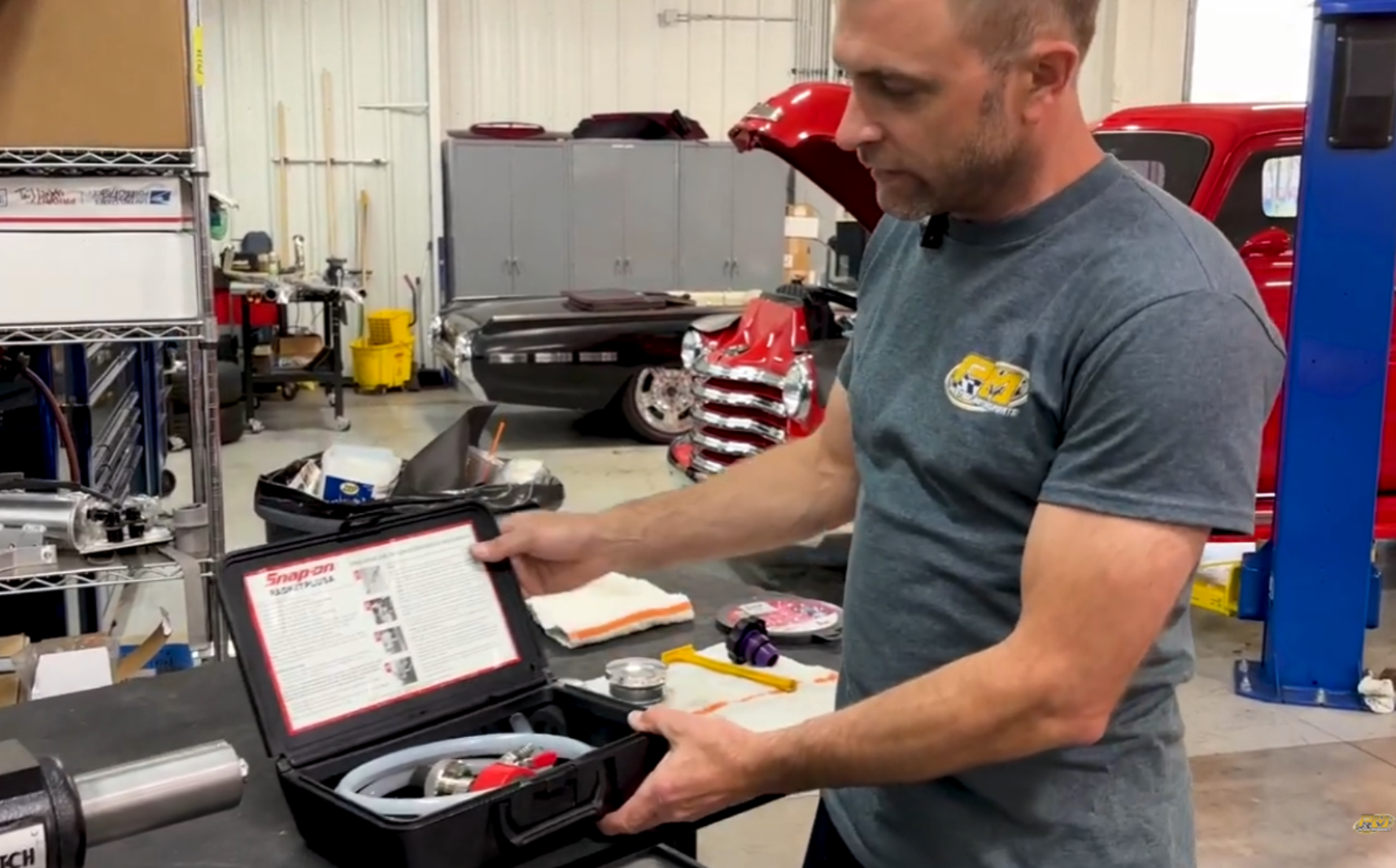
Pulling a vacuum on the cooling system serves two purposes.
First, it gives us an opportunity to see whether the system can hold vacuum. If it can’t, we know we may have a leak that needs to be addressed before going further.
Second, the vacuum helps draw coolant into the system and fill spaces that can otherwise retain air.
It’s an excellent starting point.
But we don’t assume that vacuum filling alone means every last air pocket is gone.
2. Install a Spill-Free Funnel
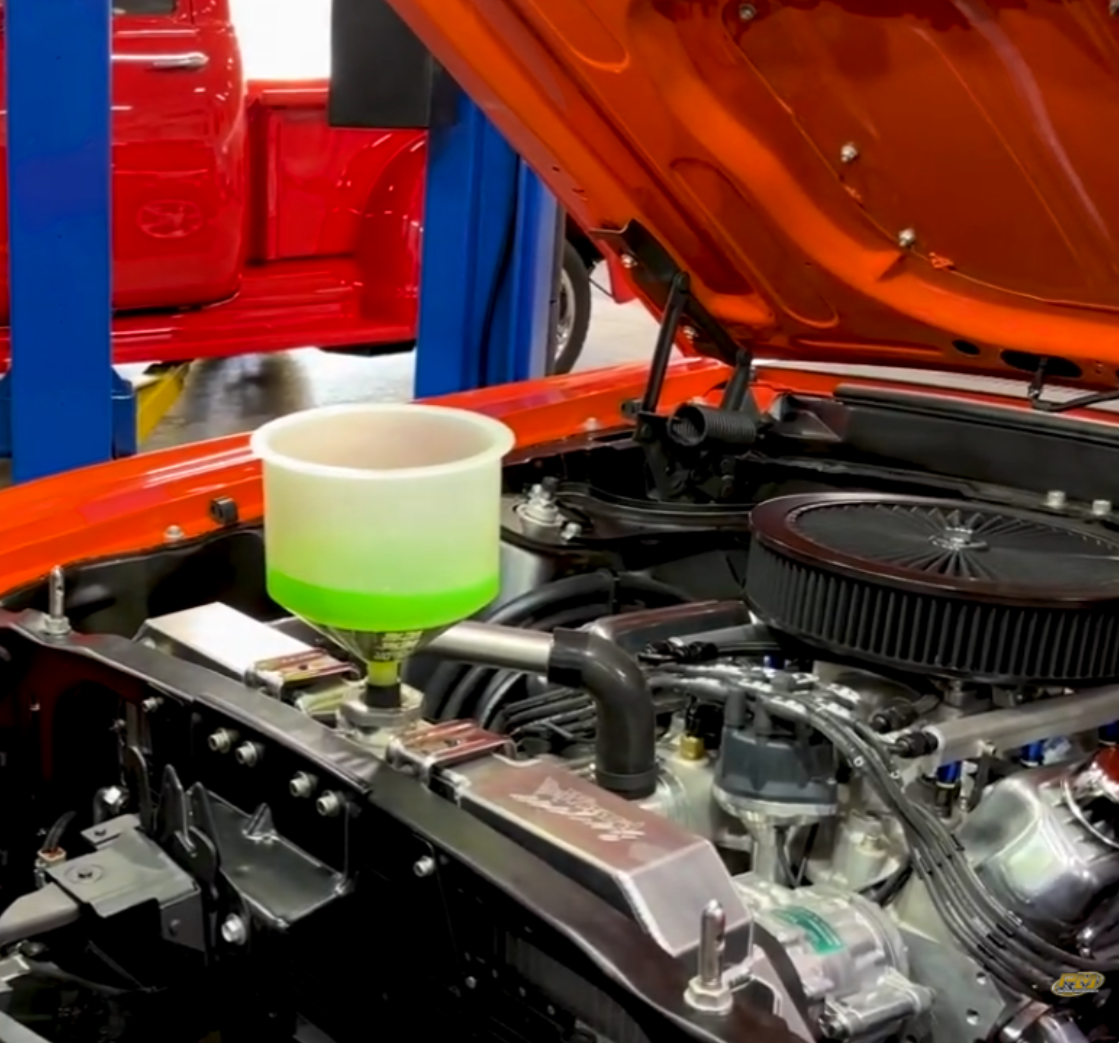
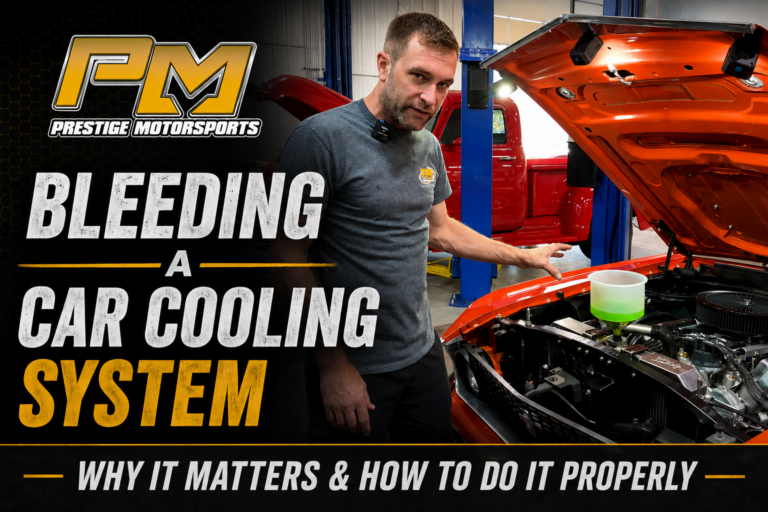
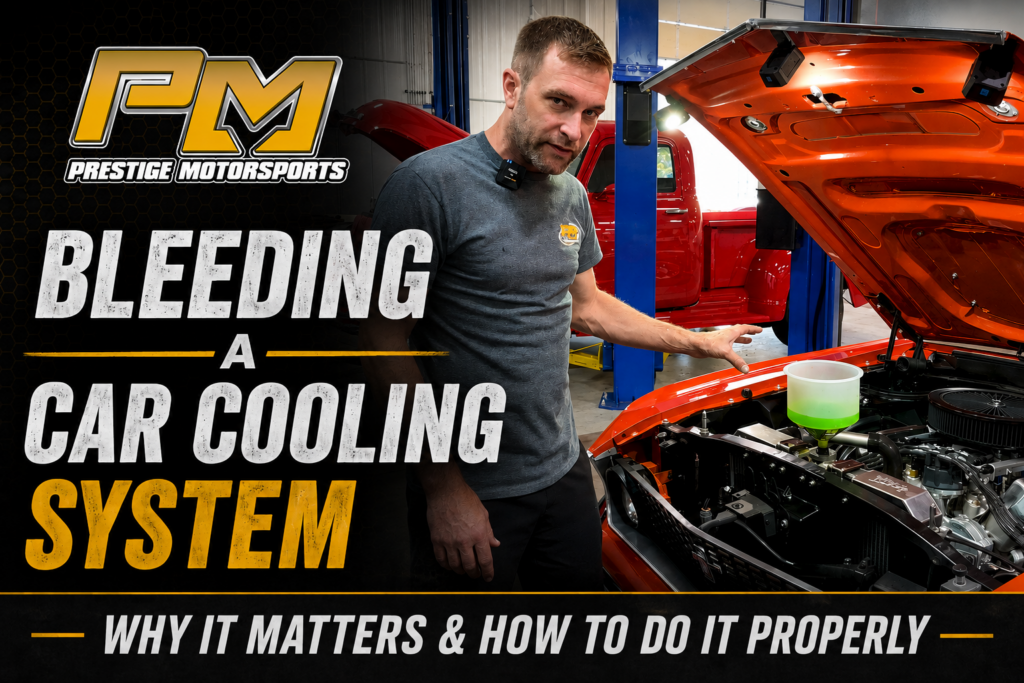
After the initial fill, we use a spill-free funnel at the cooling system’s fill point.
The funnel gives us an elevated supply of coolant while also creating a place for trapped air to escape.
We don’t fill the funnel to the top. We typically keep it around a quarter full so there’s enough coolant available as the system needs it while leaving room for the coolant level to rise as the engine warms.
Then we start the engine.
3. Bring the Engine Up to Operating Temperature
As the engine warms, we watch both the temperature and the coolant in the funnel.
Eventually, the thermostat opens and coolant begins circulating through the entire system.
That’s an important moment.
Air that was trapped inside the engine can now begin working its way toward the fill point. As it reaches the funnel, you’ll see bubbles escaping through the coolant.
That’s the system burping out trapped air.
Keep an eye on the coolant level during this process and add coolant as necessary. The goal is to maintain enough coolant in the funnel that the system doesn’t have an opportunity to pull air back in.
4. Let the Air Work Its Way Out
This is where patience matters.
Don’t see a few bubbles, assume the job is finished, and immediately put the cap on.
Continue letting the engine circulate coolant and watch for additional bubbles. Once it’s at operating temperature and the thermostat has opened, we may slowly increase engine speed to increase coolant flow and help work any remaining air pockets out of the system.
We then bring the engine speed back down gradually and continue watching the funnel for bubbles.
The objective isn’t simply to get the engine warm.
It’s to give trapped air enough time and circulation to find its way out.
5. Let the System Cool and Check the Coolant Level
Once we’re satisfied that the air has been removed, the system can cool and the coolant level can be checked again before the system is capped.
This final check matters because coolant contracts as it cools.
A properly functioning system should also have an expansion reservoir that allows coolant to move out of and back into the cooling system as temperatures change.
The Most Common Mistake: Putting the Cap On Too Soon
One of the biggest mistakes we see when people are burping a coolant system is also one of the easiest to understand.
Coolant starts coming out.
It makes a mess.
So they put the cap on.
Unfortunately, that’s often exactly when you need to leave the system open and continue allowing the trapped air to escape.
As coolant heats up, it expands. The level may rise in the funnel, and the process isn’t always perfectly tidy.
A spill-free funnel makes that much easier to manage, but the principle is what matters: don’t trap the remaining air simply because you’re ready to stop dealing with the coolant.
If you cap the system before you’ve finished bleeding it, you may be right back where you started.
Why an Expansion Reservoir Matters
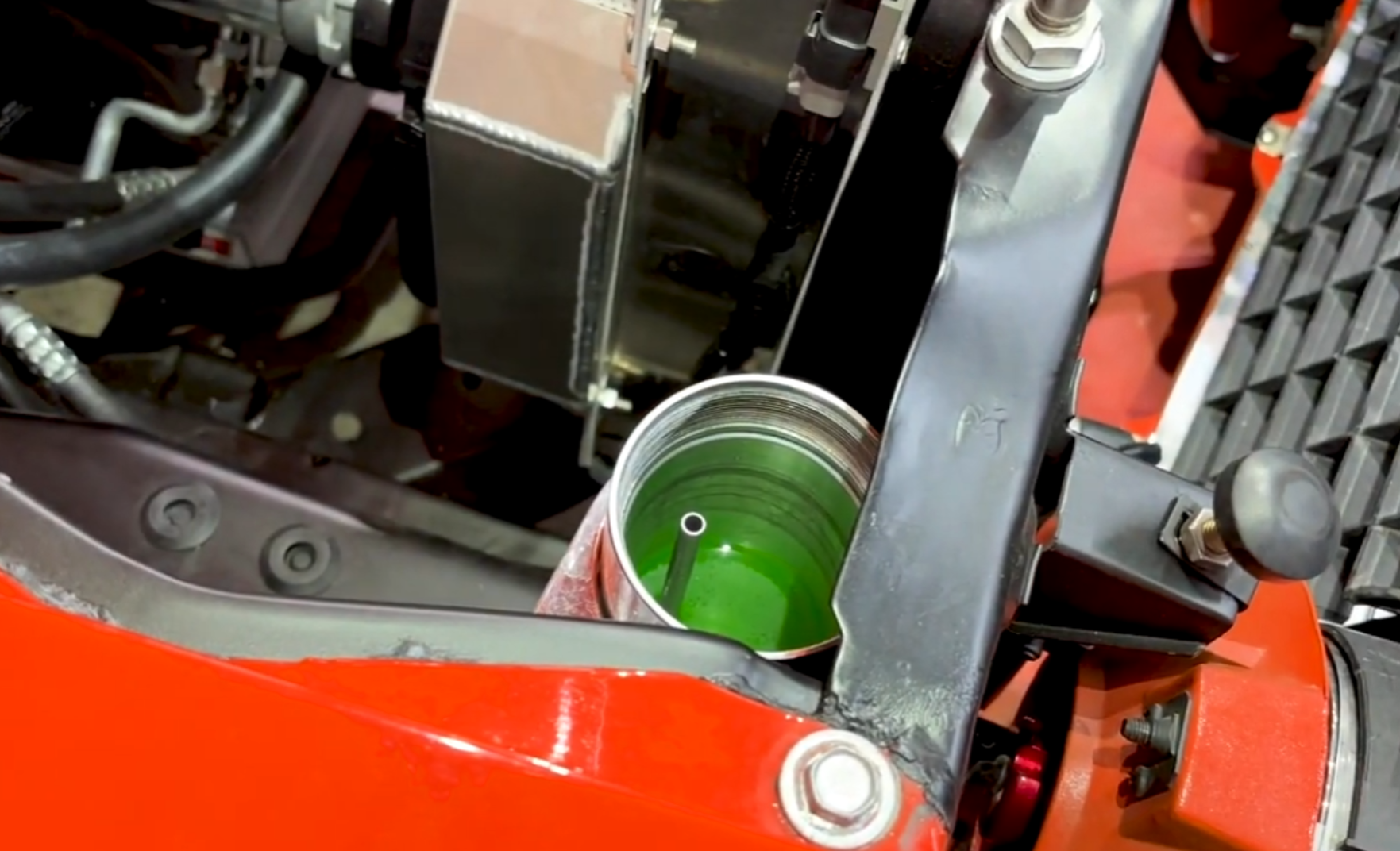
An expansion reservoir isn’t just a convenient place to put extra coolant.
As the engine reaches operating temperature, coolant expands. The reservoir gives that expanding coolant somewhere to go.
Then, as the engine cools and the coolant contracts, the system can draw coolant back from the reservoir.
Without the proper reservoir setup, the system can instead draw air back in.
Now you’ve gone through the trouble of bleeding the cooling system only to introduce another opportunity for an air pocket to develop.
That’s why we consider a properly configured expansion reservoir an important part of the overall cooling system.
Overheating After Cooling-System Work? Start With What Changed
If your vehicle wasn’t overheating before you drained, modified, or refilled the cooling system, but suddenly has a temperature problem afterward, don’t immediately assume you need a new radiator, thermostat, fan, or water pump.
Start with what changed.
Make sure the cooling system has been properly filled and thoroughly bled.
We’ve seen trapped air lead people down the wrong diagnostic path, replacing components that weren’t actually causing the problem.
If you’ve properly bled the system and the engine is still running hot, that’s when the diagnostic process needs to continue.
At that point, we can start looking at the cooling system itself, including the thermostat, water-pump operation and speed, fan performance, radiator, and whether the complete system is properly matched to the engine and vehicle.
But first, eliminate the simplest possibility.
Make sure there isn’t still air in the system.
Protecting Your Engine Starts With the Fundamentals
Cooling-system bleeding isn’t the most exciting part of owning or building a performance car.
Neither is changing the oil.
That doesn’t make either one less important.
Performance engines depend on more than the parts that make horsepower. They also depend on the systems that keep that horsepower reliable.
That’s why something as basic as properly bleeding the cooling system matters.
It can help prevent overheating, rule out unnecessary repairs, and protect the engine you’ve invested in building.
Before you put the cap on and call the cooling system full:
Make sure you’ve gotten the air out.
When Bleeding the System Isn’t Enough
Properly bleeding the cooling system should always be one of the first steps when diagnosing a temperature problem after the system has been opened or refilled.
But if the air is out and the engine is still running hot, it’s time to look deeper.
Sometimes the problem isn’t trapped air at all. It’s a cooling system that isn’t properly designed or matched to the vehicle. When a build calls for cooling-system components, Prestige Motorsports trusts Wizard Cooling because we’re not willing to compromise on the systems protecting the engines we build.
We can help evaluate the complete cooling system, identify what’s causing the problem, and determine what your engine actually needs to stay cool and perform reliably.
Have a cooling problem you can’t solve? Talk to the team at Prestige Motorsports.